

Apple Music lossless and spatial audio: Which devices and headphones do you need?
Apple Music lossless and spatial audio: Which devices and headphones do y'all need?
Fresh from WWDC 2021, Apple is gradually rolling out Apple tree Music's new lossless and spatial audio playback features. Lossless audio promises higher-resolution songs, all the way up to true Hello-Res Audio quality, while spatial audio uses Dolby Atmos mastering for an immersive 360-degree effect.
The update isn't yet available to everyone, then in the meantime information technology's worth making sure you have the compatible hardware that these features crave. Apple Music lossless is particularly stringent with its requirements: not even the Apple AirPods range tin can handle it.
- The best over-ear headphones right now
- Apple tree Music vs. Spotify: Which is better?
- Plus: Apple AirPods get new Discover My and spatial audio features
Fortunately, spatial sound has much lower requirements. Read on for an piece of cake guide to which devices and headphones are uniform with Apple Music lossless and spatial audio.
What is Apple Music lossless?
First, it'south worth agreement what exactly Apple Music's lossless feature is and how it works. Lossless audio, in general, is audio that's encoded to avoid the compression of nearly "lossy" sound formats. To make files smaller, and thus easier to download, stream or transmit over Bluetooth, lossy formats compress the files and in doing so lose some of the information stored in the source file. This results in lower-resolution music with less audible detail.
Lossless formats still compress files, but practise so in a manner which prevents such data loss, potentially resulting in richer-sounding music. For Apple tree Music, Apple has developed its own Apple Lossless Audio Codec (ALAC), which offers a choice of resolutions for playback. "CD Quality" uses a 16-bit/44.1kHz resolution, while the best available 24-flake/192kHz resolution enters true Hi-Res Sound territory.
The downside? ALAC, equally per usual with lossless formats, needs to transmit too much data for Bluetooth connections to cope with — and that's why it'due south important that you use the right devices.
What practise I need for Apple Music lossless?
Once your Apple Music app is updated with lossless audio, you lot should have the option of playing on both Android devices and iOS hardware running iOS fourteen.6 or later. Apple Idiot box devices should get support, too.
Where things beginning to get catchy is connecting that device to a pair of headphones, or a speaker. True lossless audio merely won't piece of work over any existing Bluetooth connection, and ALAC content is no different. As such, using any pair of wireless headphones is out of the question — even the Apple AirPods, Apple tree AirPods Pro and Apple AirPods Max. The AirPods Max tin can connect to an iPhone or iPad using a wired connection, just sadly this won't piece of work either — it's limited to analogue sources, rather than digital ones.
The Apple HomePod and HomePod mini also can't currently play Apple tree Music lossless, though this will apparently change with a futurity update.
It's also worth noting that while iPhone, iPad and Apple tree TV devices can play Apple Music lossless content at sixteen-flake/44.1kHz, they can't handle the total 24-chip/192kHz. Yous'll need to plug in an external DAC device to get their highest resolution — see our guide on how to play How-do-you-do-Res music on iPhone for more than on setting this upward.
In brusque, to enjoy Apple Music lossless, you'll need a pair of wired headphones, as well as an external DAC if you desire to go above CD quality.
For the best possible sound quality we recommend the Focal Articulate, a member of our best over-ear headphones rankings, though any decent pair of wired headphones will suffice.
What is Apple Music spatial audio?
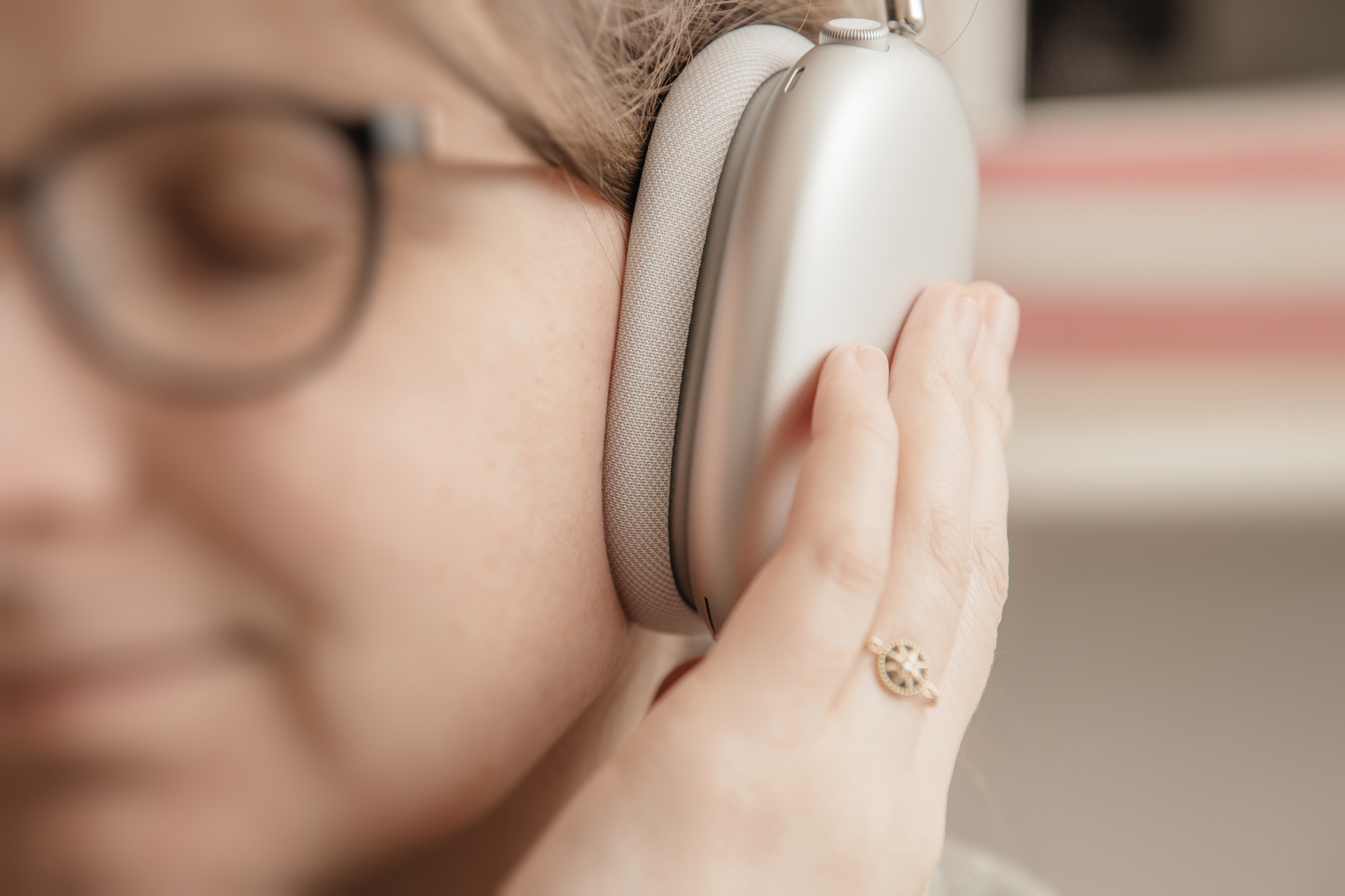
Anyone who owns the AirPods Pro or AirPods Max volition probably have used, or at least heard of, spatial audio: it's what Apple calls its 360-degree sound format. When watching compatible videos, spatial sound creates a digital surroundings sound outcome, and can utilize the caput-tracking sensors in these two sets of headphones to maintain the origin points of dissimilar sounds even as the user moves their head.
Nevertheless, spatial audio works differently in Apple tree Music: there's no head-tracking, partly because music playback doesn't crave the use of a screen, which for videos is used as an anchor signal. However, the concept is similar: instruments and vocals are mapped to a 360-degree sphere around the listener, producing a more immersive effect than you'd get from standard stereo.
Apple Music's spatial audio also piggybacks on Dolby Atmos mastering, which dissimilar ALAC doesn't take super-strict hardware requirements. The requirement for a song to be available in the Atmos format does hateful that there are fewer spatial-sound songs on Apple Music than in that location are lossless, merely the good news is you can savour it with a much wider range of hardware.
What practice I need for Apple music spatial audio?
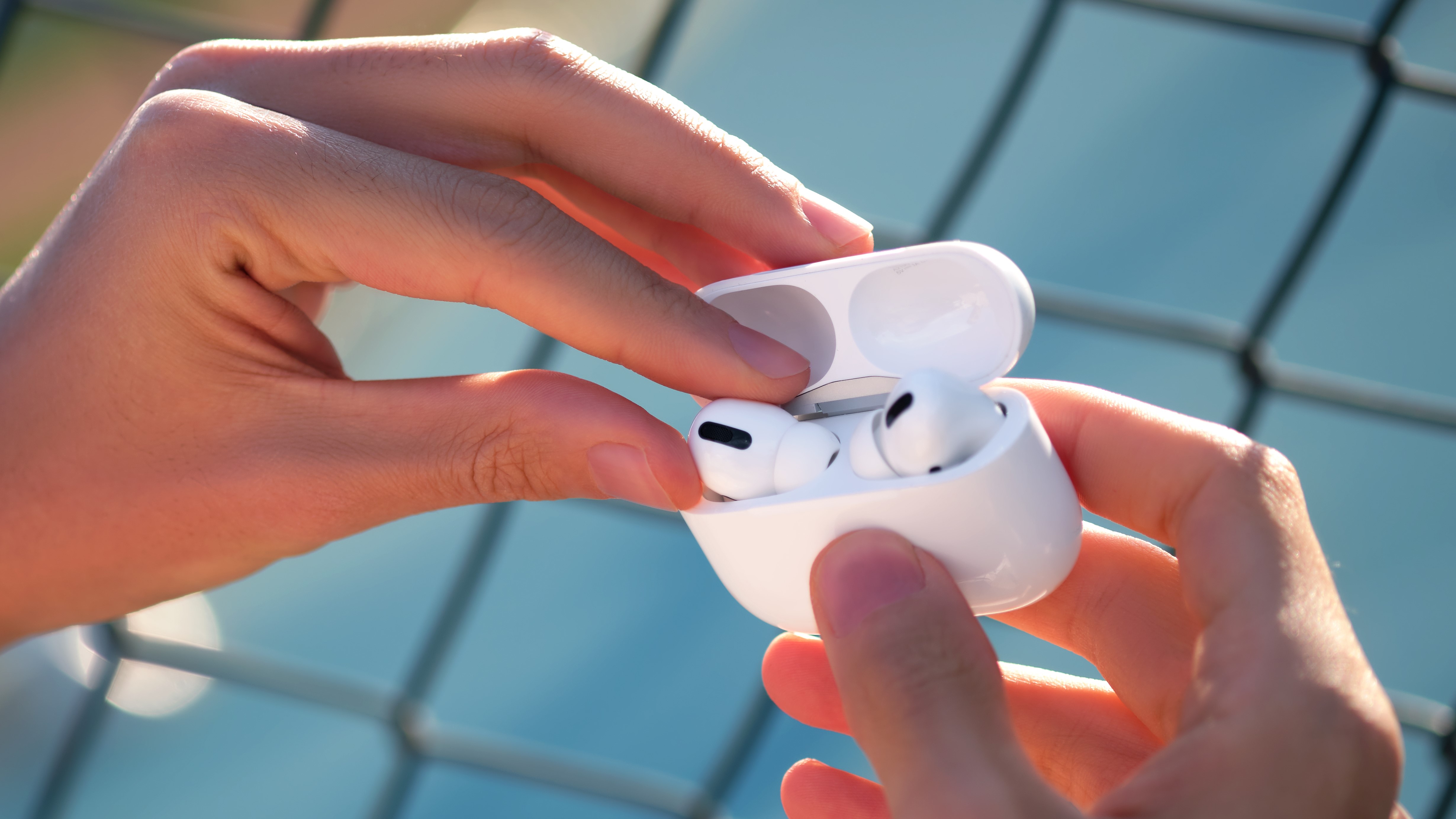
Thankfully, Apple Music's have on spatial audio is much more low-key on which headphones you lot use. In fact, Apple tree has said that any headphones will work with spatial audio, not but AirPods. Information technology doesn't affair if they're wired or wireless.
In that location's nonetheless a slight benefit to using Apple's own headphones or earbuds, as Apple Music volition automatically play songs with spatial sound when a pair of AirPods is connected. Certain Beats headphones become this perk too, including the Beats X, Beats Flex and Powerbeats Pro. A full list is available on Apple's support site.
For other headphones, you'll demand to enable information technology manually in Settings, past navigating to Music then setting Dolby Atmos to "Always On."
You should also be able to go a more immersive effect from Dolby Atmos-enabled speakers, including some of the all-time soundbars. Apple tree also claims that spatial audio works with the built-in speakers on the iPhone XR or later on (except the iPhone SE 2020), and nigh recent iPads, though for best results we'd recommend a pair of headphones or much more powerful Atmos speakers. The HomePod and HomePod mini work, likewise.
The grab is that while spatial audio offers a much wider choice of playback devices, source devices are substantially limited to Apple's own hardware. That means the Apple tree Music app won't include Dolby Atmos support on Android. Here are the source devices that Apple tree Music spatial audio plays overnice with:
- iPhones on iOS 14.6 or later
- iPads on iOS 14.6 or later
- Macs and MacBooks on macOS xi.4 or later
- Apple tree Tv set 4K on tvOS 14.half-dozen or subsequently
- More: The best headphones can all play Apple Music spatial audio

Source: https://www.tomsguide.com/news/apple-music-lossless-and-spatial-audio-which-devices-and-headphones-do-you-need
Posted by: wellmaneirchey.blogspot.com
0 Response to "Apple Music lossless and spatial audio: Which devices and headphones do you need?"
Post a Comment